Technology & Resiliency
Innovation with Impact
Every day, our team connects those in crisis with the help they need—serving our community with professionalism, compassion, and unwavering dedication.
— Behind the Call —
The Team
Snohomish County 911 designs, builds, and maintains the technology backbone for 39 fire, law enforcement, and EMS partners across 2,196 square miles.
As industry leaders, our forwardthinking team continually develops new ways to keep emergency communications resilient and futureready, so when a 911 call comes in, proven systems and innovative technology work together to get the right help to the right place, every time.
Our technology department is structured across four core areas that work together to ensure reliable emergency communications. Each area has distinct responsibilities but share a common focus on reliability, security, and continuity.
Together, these teams support our agencies with radio programming, repairs, maintenance, and fleet expansions, ensuring that technology investments translate into real operational value for our staff, our partners, and the communities we serve.
Additionally, we are participating in regional interoperability planning which will help with large responses for emergencies or planned events (like the World Cup).
By pairing robust infrastructure with disciplined, 24/7 operations, SNO911 ensures reliability, interoperability, and continuity, today and in the future..
Mission-Critical Expertise
At Snohomish County 911, we deliver secure, reliable technology that powers effective emergency response across the entire county. Our skilled team includes experts in applications, infrastructure, facilities, and mission-critical radio networks, who continuously identify ways to strengthen operations, improve service and security to better support the needs of our growing community.
01
The Need
In any emergency response system, technology is critical to public safety. It directly affects response times, situational awareness, and continuity of operations. Systems must be secure, reliable, and intuitive for those who depend on them in high-stakes environments.
02
The Impact
Thoughtful technology investments strengthen resilience and support faster, more informed emergency response. When done right, innovation enhances, not disrupts, operations and equips first responders with tools they can trust when it matters most.
03
The Approach
We take a structured approach to innovation. Every solution is evaluated for impact, risk, sustainability, and supportability, with focus on resilience, interoperability, compliance, and cybersecurity. We implement technology deliberately to drive measurable improvements in service, reliability, and efficiency.
More Than a Call Center
Go behind the scenes with Snohomish County 911 for a closer look at the people, facility, systems, and decisions that make every second count — from the moment a call comes in to the moment help arrives.
You'll see how resilient technology, disciplined processes, and a highly trained team work together to keep calls answered, responders connected, and the community safe.
— Innovation with Impact —
Innovation, impact, vision
Innovation is at the heart of how Snohomish County 911 serves our community. From modernizing radios used on the front lines, achieving national accreditation, strengthening regional resiliency, deploying intelligent nonemergency call handling, or improving communications inside complex buildings, we’re focused on finding ways to make difference when seconds matter.
Together, each innovative initiative contributes to the reliability, clarity, and coordination for first responders and partner agencies, ensuring the technology behind every call is as strong and resilient as the people answering it.
— Infrastructure —
Purpose Built Infrastructure
Behind every 911 call is an invisible backbone of infrastructure working around the clock to ensure we can answer every call.
That invisible infrastructure includes robust backup and redundancy, hardening tower and power systems, and a Computer-Aided Dispatch [CAD] platform to ensure resilience even under extreme stress.
From backup generators and extended battery capacity to environmental monitoring, cybersecurity protections, and regionally connected CAD systems, each investment is focused on a single outcome: ensuring that when our community calls, the technology behind the response is as reliable as the people who answer.
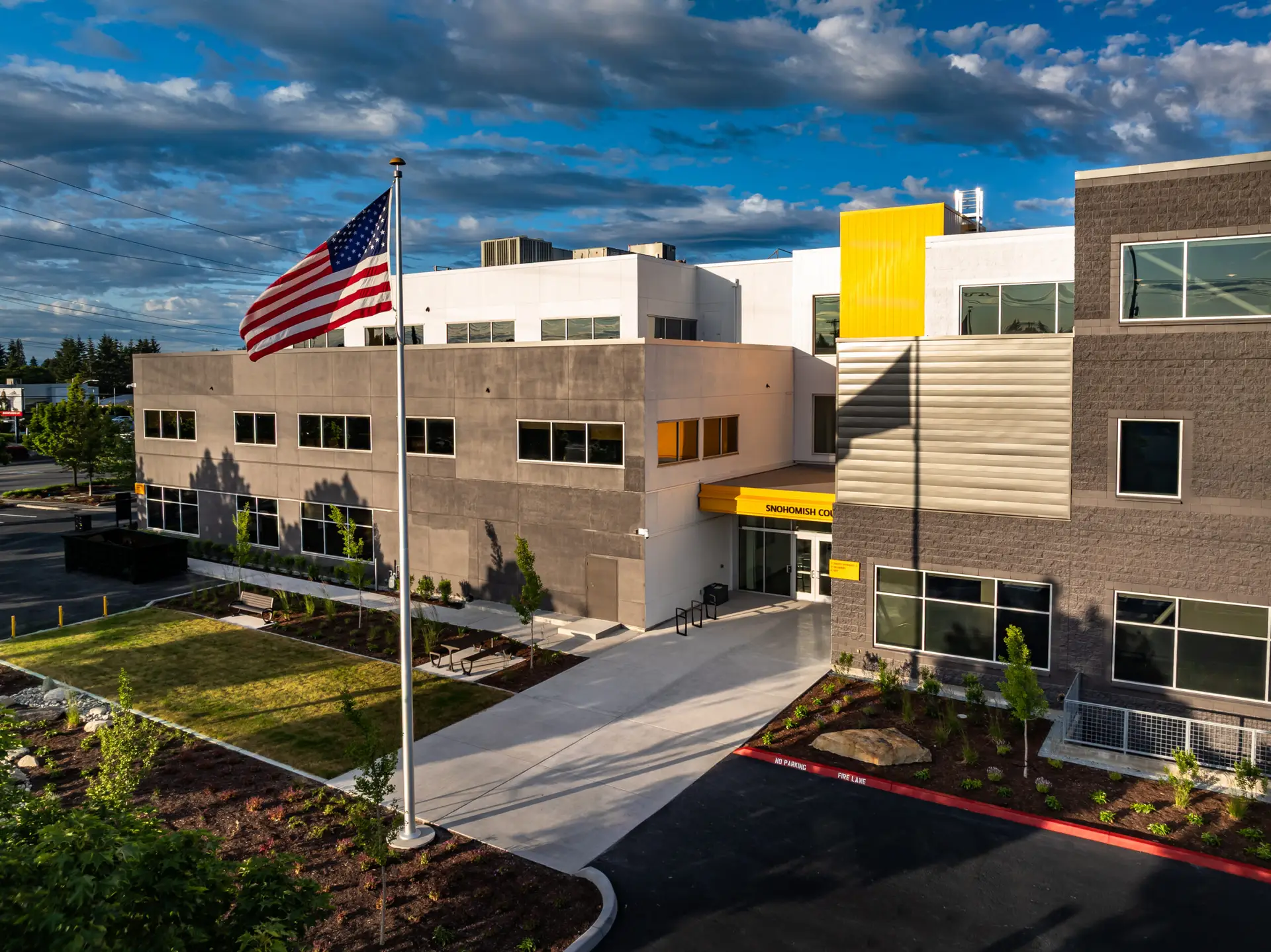
Dependability
Towers, Power & Battery Systems — Snohomish County 911 maintains a complex, layered backup and redundant infrastructure designed to keep critical systems online even when things go wrong.
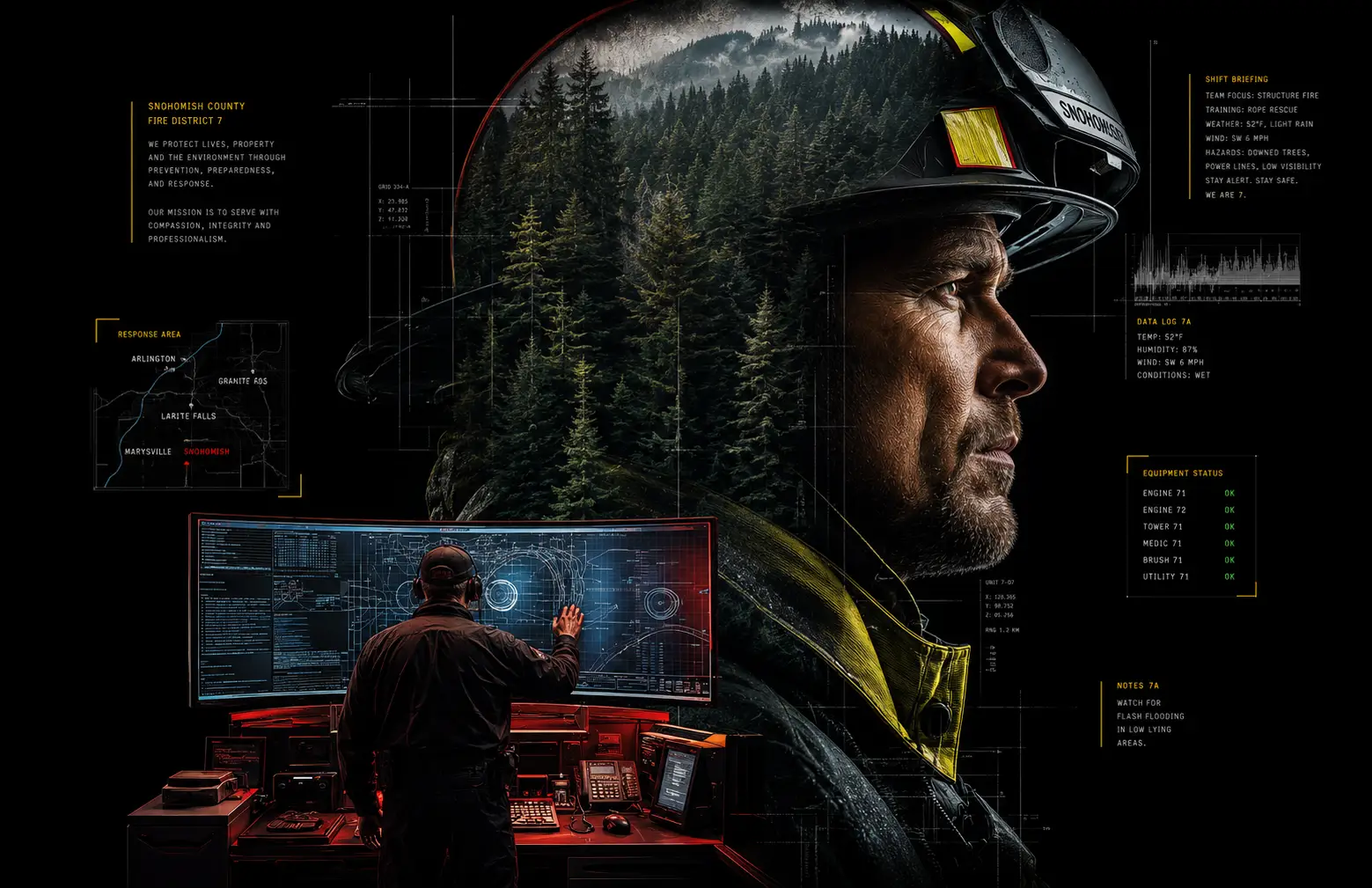
CAD System Updates
A Computer-Aided Dispatch (CAD) system is a mission-critical software platform used by public safety agencies to manage emergency and non-emergency incidents from initial call through dispatch and field response.
CAD systems help dispatchers and responders coordinate more quickly, accurately, and efficiently during incidents.
As Snohomish County 911 moves toward the next generation of CAD, the goal is to turn data into clear, timely insight — so call takers see what matters faster, dispatchers make stronger decisions under pressure, and responders arrive with better information to keep people safe.
We're building a future-ready platform that supports more resilient service for every agency and every caller.
— Next Generation 911 —
Next Generation 911
Vision | Evolution
Future of Emergency Communications
This fall, SNO911 will host the inaugural 911 Innovation Summit, a first‑of‑its‑kind gathering for a select group of 911 dispatchers, public safety leaders, and forward‑thinking technologists to redefine what's possible in emergency communications.
Over three intensive days, they'll collaborate to transform everyday operational challenges into a practitioner‑built blueprint — a shared framework that reduces cognitive load, improves real‑time decision‑making, and reshapes how the next generation of emergency communications systems integrate, behave, and evolve to truly support the people who answer the call.
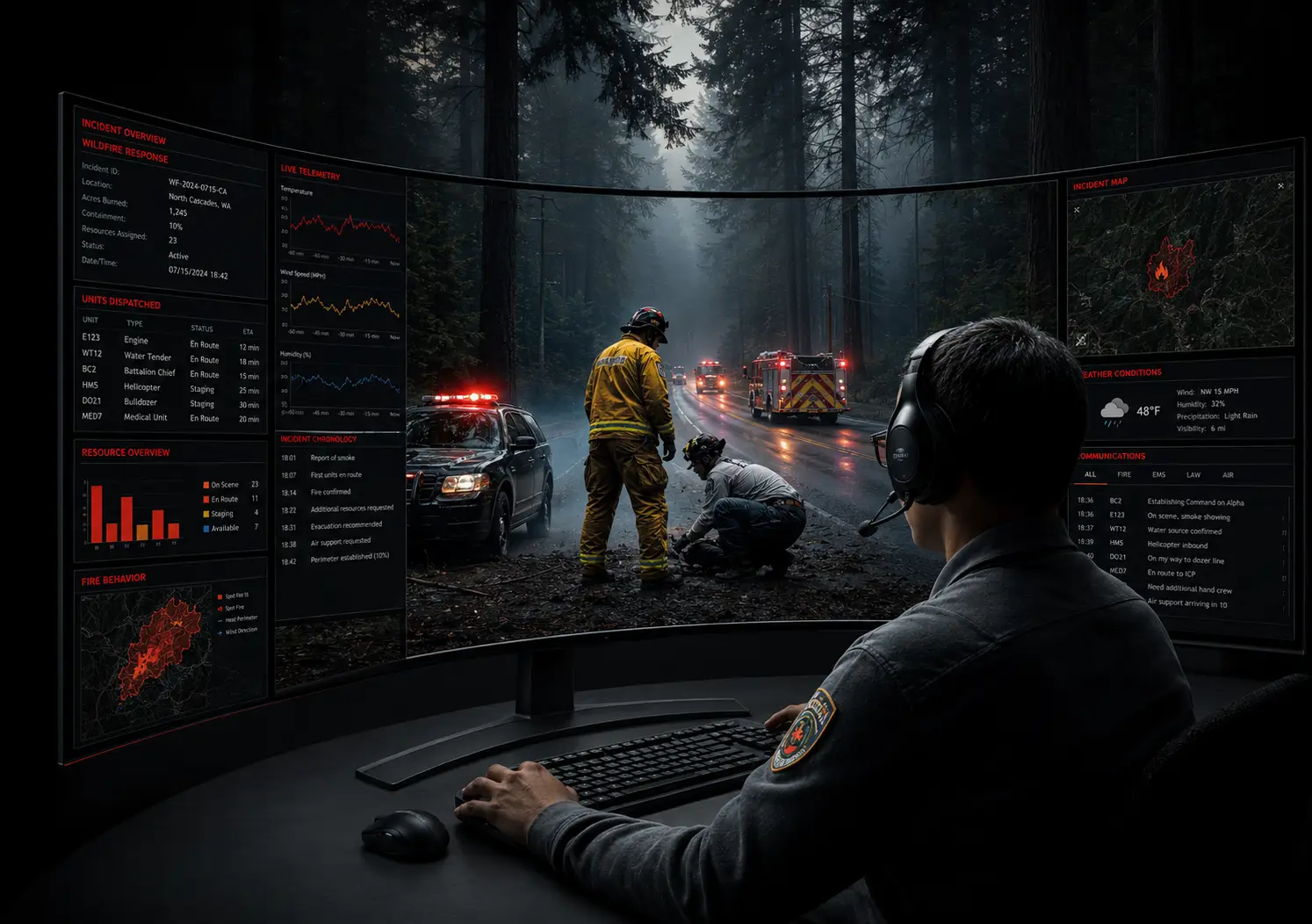
INNOVATION
Real-Time Intelligence Centers
(RTICs) help law enforcement do more by working smarter. Rather than adding officers or building entirely new systems, RTICs use dedicated teams to organize and interpret information across agency and community partnerships — making existing data more meaningful while also adopting emerging technologies that expand what is possible. Officers stay in the field while receiving timely, actionable intelligence that helps them identify suspects, locate stolen vehicles, and find missing or at-risk individuals faster. Work that once took days can often take minutes.
Agencies across the country that have implemented this model have documented measurable outcomes: faster case resolution, fewer repeat incidents, and more efficient use of patrol resources. The value comes from getting the right information to officers who need it, when they need it.
HOW SNOHOMISH COUNTY IS BUILDING TOWARD THIS MODEL
SNO911, along with police, fire and EMS agencies in the county, are in the early stages of developing a countywide RTIC program — and we are building the governance structure before the technology, not after. That sequencing is intentional. The communities we serve deserve a say in how these tools are used, what oversight exists, and how information is managed. Getting that right takes time and coordination, and we are not willing to shortcut it.
That work starts with a dedicated RTIC leadership team that includes representation from law enforcement partners, Fire/EMS, and elected officials. Policies and procedures are being developed collaboratively — across the public safety community and with local input — to ensure what we build reflects the expectations and needs of Snohomish County residents, not just operational priorities. The goal is a countywide model that is effective, accountable, and built on a foundation the community can trust.
Got Questions?
From emergency call-taking and 911 dispatch to specialized programs like Nurse Navigation, Smart 911, TTY, and Text to 911, Snohomish County 911 connects you to the right help at the right time.
Explore our FAQs to see how each service works and how it supports you and your family.